How to calibrate your drone compass before flying in Houston
A practical Houston guide to drone compass calibration: why our soil, bridges, and downtown towers throw off your compass, how to calibrate it correctly, and when to get it serviced.
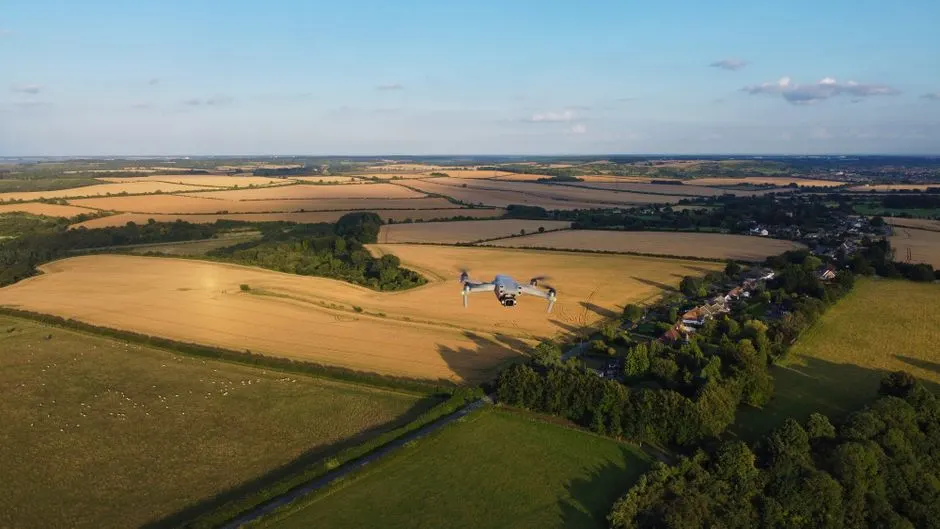
To calibrate your drone compass before flying in Houston, power on the aircraft away from metal and concrete, open the compass calibration menu in your app, rotate the drone horizontally 360 degrees, then nose-down 360 degrees, and wait for the green confirmation. Do it outdoors, at least 10 feet from rebar, cars, and power lines, and never on a downtown sidewalk. Houston's gumbo clay, iron-rich soil, and dense steel skyline make compass errors more common here than in most U.S. cities, so a clean calibration before every new flight location is not optional. This guide walks you through the exact steps, the Houston-specific traps, and when a stubborn compass needs a repair shop instead of another spin.
Why Houston's environment makes compass calibration essential
Houston sits on a mix of expansive clay and iron-heavy soil, and that ground composition quietly interferes with the magnetometer inside your drone. The compass reads Earth's magnetic field to know which way is north; when local magnetic distortion is strong, that reading drifts and your drone starts toilet-bowling, drifting on yaw, or refusing to hold a heading.
Add the built environment and the problem compounds. Downtown, the Texas Medical Center, and the Energy Corridor are packed with steel-framed towers, elevated freeways, and reinforced parking garages. Fly within 30 feet of that steel and your compass can be off by 15 to 40 degrees even after a fresh calibration. That is why a calibration done in your driveway may fail the moment you launch from a job site in Drone compass calibration Houston TX conditions that include rebar, transformers, and buried utilities.
Weather matters too. Summer heat pushes surface temps past 100°F, and the magnetic signature of asphalt and metal roofs shifts slightly as they heat. After a storm rolls through, standing water and wet clay can change the local field enough to trigger a recalibration prompt. If you fly the same park every weekend, you may go months without an issue; if you chase jobs across the metro, expect to recalibrate at nearly every new launch point.
How to calibrate your drone compass before flying in Houston TX
Here is the sequence we use on every test flight at our bench, and it works the same in the field. Total time is about 90 seconds once you know the routine.
- Pick a clean launch spot. Grass, dirt, or a wooden deck is ideal. Stay 10 feet or more from cars, chain-link fences, metal picnic tables, and concrete with visible rebar. Avoid launching from the bed of a truck.
- Power on the drone and controller, then open the app. Wait for GPS lock and let the aircraft sit still for 20 to 30 seconds so the IMU settles.
- Open the compass calibration menu. In DJI Fly it is under Safety > Sensors > Compass. In older GO apps it is under Aircraft > Compass.
- Horizontal rotation. Hold the drone level and rotate your body 360 degrees until the indicator turns green. Keep the drone at chest height and away from your phone, keys, and watch.
- Vertical rotation. Point the nose straight down and rotate 360 degrees again until the app confirms.
- Verify the heading. Set the drone down, check that the on-screen compass arrow matches true north, and arm the motors. If the arrow swings more than 10 degrees while the drone is still, do not take off.
If the app throws a calibration error twice in a row at the same spot, move 50 to 100 feet and try again. Persistent failure at multiple locations points to a hardware issue, not a procedure problem, and that is when a bench check makes sense. Our team handles that daily through Drone sensor calibration Houston TX, where we test the magnetometer against a known reference and replace the module if it has drifted out of spec.
Why does my drone compass need calibration in Houston Texas?
Your drone compass needs calibration in Houston Texas because the local magnetic environment changes from one launch site to the next, and the magnetometer has no way to know the difference without a fresh reference. Three forces drive that:
- Ferrous soil and fill dirt. Large parts of Harris County sit on iron-rich clay and imported fill that carry a stronger magnetic signature than the sandy soils common in other states.
- Steel infrastructure. Bridges, overpasses, rail lines, and high-rises bend the local field. The closer you launch, the bigger the error.
- Magnetic interference from gear. Speakers, magnets in camera gimbals, and even a magnetic phone mount on your controller can throw the calibration off if they are within a few feet during the spin.
You will also see the prompt after a firmware update, after a hard landing, or any time the drone travels more than about 30 miles from its last calibration point. If you drove from Houston to Galveston for a beach shoot, recalibrate before you launch. Skipping it is the fastest way to a flyaway.
Where to get drone compass calibration in Houston TX
You have two realistic options: do it yourself in the field, or bring the aircraft to a shop that has a magnetically clean bench. Field calibration is free and takes 90 seconds, and it is the right call for routine flying. A bench calibration is the right call when the compass will not hold a heading no matter how many times you spin.
We run bench calibrations at our Houston Drone Repairs Pros shop, where the test area is shielded from the steel and wiring that make a garage or kitchen useless for this work. We verify the magnetometer against a reference heading, check the IMU at the same time, and log the before-and-after error so you know whether the module was drifting or the procedure was the problem. If you are searching for Drone diagnostics Houston TX because your drone keeps prompting for calibration mid-flight, that is the visit to book.
If you fly commercially around the Port of Houston or the Ship Channel, where cranes and container stacks create some of the worst magnetic noise in the region, a quarterly bench check is cheap insurance. We also see a lot of compass complaints from pilots working the drone service Houston corridor along I-10, where every job site sits next to steel and high-voltage lines.
How much does drone compass calibration cost in Houston TX?
Typical 2026 pricing in Houston runs $0 for a field calibration you do yourself, $45 to $95 for a bench compass and IMU calibration at a repair shop, and $120 to $260 if the magnetometer module has to be replaced. Most consumer drones fall in the middle range. Enterprise airframes with redundant compasses cost more because there are two modules to verify.
Diagnostics usually run $35 to $75 and are often waived if you approve the repair. A compass module itself is a $20 to $60 part on most DJI and Autel platforms; the rest of the bill is labor and the calibration time. If a shop quotes you $400 for a compass-only job on a Mavic-class drone, get a second opinion.
Compare that to the alternative. A flyaway over Buffalo Bayou or a crash into a downtown parking structure costs $800 to $2,500 in replacement or repair, plus whatever data you lose. The calibration is the cheap part.
Common mistakes to avoid when calibrating in Houston
We see the same five errors on customer drones week after week, and each one is avoidable.
- Calibrating on concrete. Rebar in slabs and driveways is the number one cause of a bad calibration. Move to grass or dirt.
- Standing next to your truck. A vehicle is a 4,000-pound magnet as far as your drone is concerned. Give it 10 feet minimum.
- Calibrating with gear on you. Watches, magnetic phone mounts, and wireless earbuds cases all distort the field. Set them down 15 feet away.
- Spinning too fast. Rushing the rotation causes the app to accept a bad sample. Slow and steady wins this one.
- Ignoring repeated prompts. If the drone asks for calibration three flights in a row at three different sites, the compass is failing, not the location.
One more Houston-specific trap: do not calibrate inside a parking garage and then fly from the roof. The steel cage below you will have already corrupted the reference. Walk out, find open ground, and start fresh.
When to call a professional
Call a professional when the compass fails calibration at three or more clean locations, when the drone yaws or drifts on its own after a confirmed calibration, or when you see a compass error paired with an IMU warning. Those symptoms point to a failing magnetometer, a damaged GPS module, or a crash that knocked the compass off its mount.
Our technicians at Houston Drone Repairs Pros test the compass, IMU, and GPS together because they share data and a fault in one will mimic a fault in another. We replace the module if it is out of spec, recalibrate on the bench, and test-fly before you pick it up. If your aircraft has been in the water or taken a hard hit, we will also check for related damage through Drone crash repair Houston TX so you are not back a week later with a second problem.
Frequently Asked Questions
How to calibrate your drone compass before flying in Houston TX?
Power on outdoors at least 10 feet from metal and concrete, open the compass menu in your app, rotate the drone horizontally 360 degrees, then nose-down 360 degrees, and confirm the green check. Verify the heading arrow before arming. The whole process takes about 90 seconds.
Why does my drone compass need calibration in Houston Texas?
Houston's iron-rich clay soil, steel bridges, and dense downtown towers distort the local magnetic field, so the compass needs a fresh reference at each new launch site. Traveling more than 30 miles, firmware updates, and hard landings also trigger the prompt.
Where to get drone compass calibration in Houston TX?
You can calibrate in the field for free, or bring the drone to a shop with a magnetically clean bench. Houston Drone Repairs Pros runs bench compass and IMU calibrations with a reference heading check, usually same-day turnaround.
How much does drone compass calibration cost in Houston TX?
Field calibration is free. Bench calibration runs $45 to $95 in 2026, and a full magnetometer module replacement runs $120 to $260 including labor. Diagnostics are $35 to $75 and often waived with approved repair.
Can I calibrate drone compass myself in Houston TX?
Yes. Field calibration is a routine owner task and takes about 90 seconds. Do it outdoors on grass or dirt, away from vehicles and rebar. If it fails three times at clean locations, stop and book a bench diagnostic.
Get help with Drone repair in Houston
If your compass will not hold a heading, keeps prompting mid-flight, or your drone has started drifting after a hard landing, our team can diagnose and fix it. We test the compass, IMU, and GPS together and test-fly before you pick up.
Call Houston Drone Repairs Pros at +1 281 555 4468 to book a compass calibration or repair.