Controller powers on but will not bind
We test the radio module, check firmware versions on both ends and reflash if needed. If the module itself failed, we replace it and re-pair the link. Most no-bind faults are resolved the same day.
Drone transmitter repair Houston TX pilots can count on starts with a real diagnostic, not a guess. We repair no-signal, short-range and binding-failure transmitters for hobby flyers, Part 107 operators and inspection crews across Harris County. Most units are opened, tested and quoted the same day you drop them off, and we stock common antennas, gimbals and sticks so your controller is not sitting on a shelf for weeks.
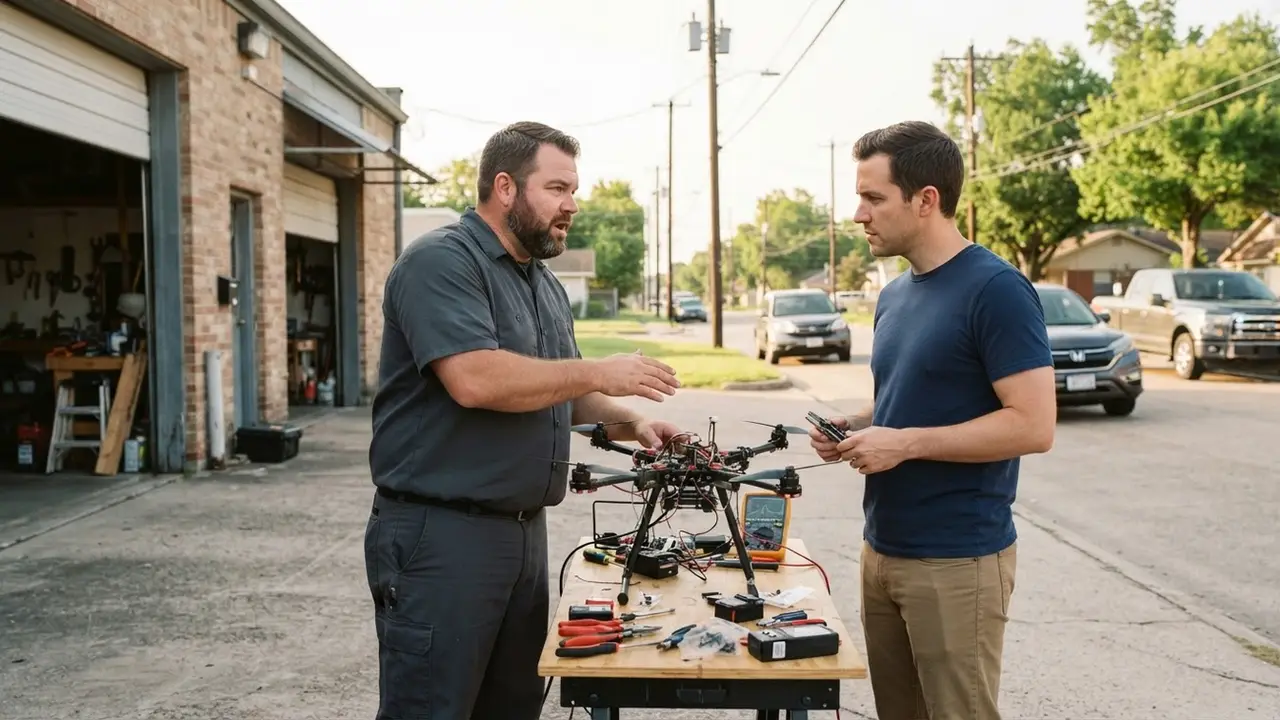
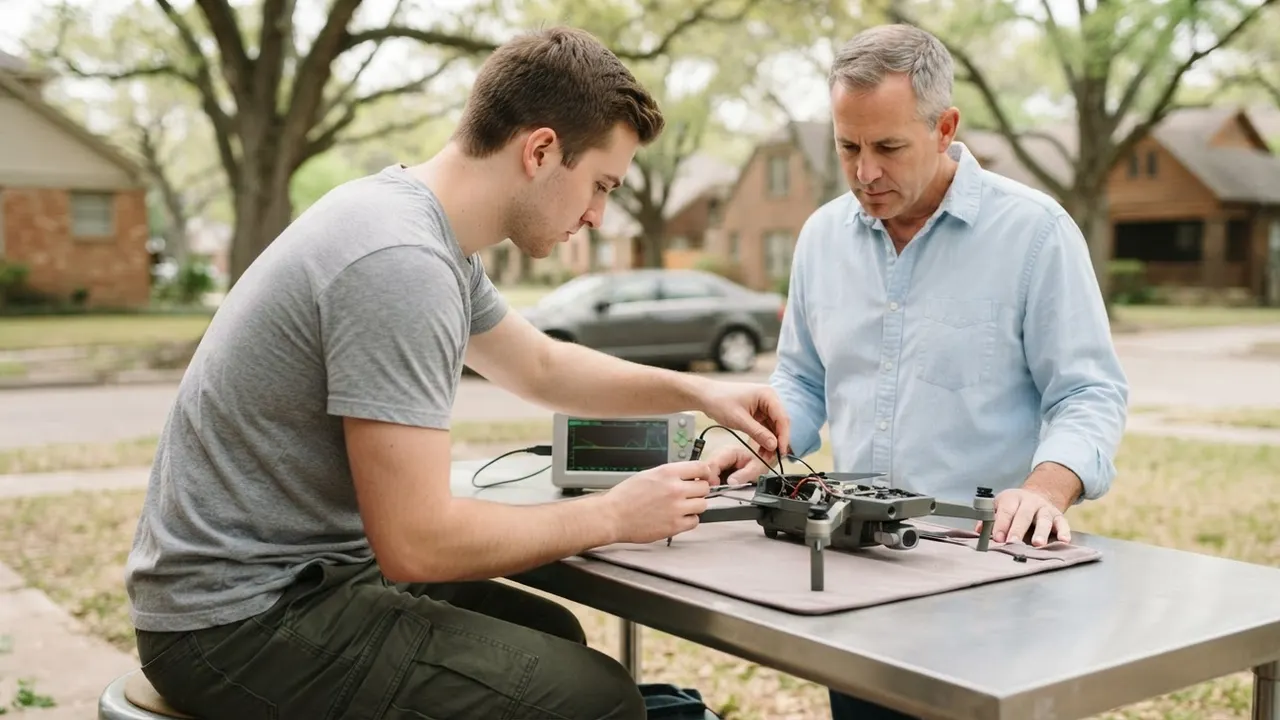
Drone transmitter repair Houston TX is the bench-level service that restores the handheld controller sending commands to your aircraft. We open the shell, inspect the antenna leads, gimbal sticks, ribbon cables and mainboard, then run the unit on a multimeter and oscilloscope to find where the signal dies. Common culprits include cracked antenna solder joints, worn stick potentiometers, water damage from a bayou dunking and firmware issues that stop the radio from binding. Once we isolate the fault, we replace the part, reflash if needed and range-test before you get it back.
Houston flying conditions are hard on transmitters. Summer heat pushes LiPo batteries into swelling, humidity corrodes contacts, and crash damage from a hard landing in Memorial or Clear Lake bends antenna mounts. When your controller stops binding mid-flight, you need a drone transmitter repair shop Houston TX pilots already trust. We see everything from Holy Stone trainers to Skydio enterprise rigs, and we keep the job moving so you are not grounded through the weekend.
Every job starts with a full diagnostic and ends with a live range test. The list below is what is normally covered in a standard transmitter repair. If we find a second fault during teardown, we quote it before touching it, so there are no surprise charges on pickup.
We open the shell, inspect antenna leads, sticks, ribbon cables and mainboard, then test with a multimeter and oscilloscope. You get a named fault, not a guess. This stage runs 45 to 90 minutes and is included in the diagnostic fee.
Cracked solder joints, bent connectors and broken antennas get repaired or replaced with matched parts. We verify range after the fix, because an antenna that looks fine can still cut your signal in half.
Worn potentiometers and sticky gimbals get replaced or cleaned. We check centering and full travel on every stick, then confirm response in the app. This is the repair most pilots notice immediately on the first flight.
Water damage, burned traces and failed radio modules get board-level attention. We ultrasonic-clean corroded boards, replace components and reflow joints on a temperature-controlled soldering station before powering anything up.
We reflash the transmitter and aircraft to matched firmware, then bind and confirm telemetry. A botched update is a common cause of no-bind faults, and it is one of the fastest fixes we do.
Every repaired transmitter is bound to a test aircraft and walked through a range check. Stick response, telemetry and failsafe behavior are all verified. If signal drops early, the unit goes back on the bench before you get the call.
Bring your transmitter, and the aircraft if you have it, to our Houston bench. We log the model, serial and your reported symptom, then photograph the unit as received. Intake takes about 10 minutes, and you get a ticket number so you can check status any time.
We open the shell and inspect antenna leads, gimbal sticks, ribbon cables and the mainboard under magnification. A multimeter and oscilloscope confirm where the signal stops. This stage runs 45 to 90 minutes and is where we separate a simple antenna fault from a failed flight controller.
You get a written number with the fault named in plain language. No surprise line items. Approve by phone or text and we start the same day. If the repair is not worth it, we tell you that too, and you only pay the diagnostic fee.
We replace the failed part, resolder antenna joints on a temperature-controlled soldering station, and reflash firmware where the radio needs it. Most transmitter repairs take two to four hours of bench time. Water-damaged boards get an ultrasonic clean before anything is powered up.
Before you get the call, we bind the transmitter to a test aircraft and walk the range. Stick response, telemetry and failsafe behavior all get checked. You leave with a tested controller, a 1-year workmanship warranty on the repair, and advice on keeping it alive.
Purpose-built equipment, used by trained technicians — so the job is done accurately the first time.
Traces the radio signal path to find where output dies. Essential for intermittent faults that a simple power-on test misses.
Checks voltage, continuity and resistance across antenna leads, stick potentiometers and mainboard traces before and after repair.
Temperature-controlled rework on antenna joints, ribbon cables and board-level components. Prevents heat damage to nearby parts.
Finds shorted components and hot spots on a powered board, which speeds up board-level diagnosis on water-damaged units.
Level platform for IMU and compass calibration when a control fault turns out to be a sensor problem, not a radio problem.
Confirms gimbal travel and centering after stick or gimbal assembly replacement, so control response matches factory spec.
Clears dust, sand and debris from sticks, vents and connectors before teardown, protecting internal parts during service.
A Galleria-area real estate photographer had a DJI controller that powered on but refused to bind after a firmware update. Two other shops told him to buy a new controller.
We reflashed both the transmitter and aircraft to matched firmware, replaced a worn antenna connector and range-tested to 2,400 feet. Total cost was $165 and the unit was ready in one day.
A hobby flyer in Montrose dropped a controller in Buffalo Bayou. It powered on but sticks were erratic and range was under 150 feet. Corrosion had spread across two contacts.
We ultrasonic-cleaned the board, replaced the corroded contacts and dried the unit fully before power-up. Range came back past 2,000 feet and stick response returned to factory feel in three days.
An FPV racer in Clear Lake crashed hard and one stick went dead. The antenna mount was bent and the radio would not hold a bind past 300 feet.
We replaced the potentiometer, straightened the antenna mount, reflashed firmware and balanced the sticks. The radio held signal past 1,500 feet and felt better than new in 48 hours.
Most transmitter faults fall into a handful of patterns. Naming yours correctly is half the repair, and it is why our diagnostic comes before any parts order.
Ask a pro →We test the radio module, check firmware versions on both ends and reflash if needed. If the module itself failed, we replace it and re-pair the link. Most no-bind faults are resolved the same day.
Short range almost always traces to antenna damage or a corroded connector. We replace or resolder the antenna, verify the connector, then range-test to confirm full signal strength is back.
We replace worn potentiometers and gimbal assemblies, then check centering and full travel in the app. Sticks come back to factory feel, and we confirm response on a test flight before handoff.
We ultrasonic-clean the board, replace corroded parts and dry the unit fully before applying power. Water damage repair is one of our most common Houston jobs, and most units come back to full function.
$95 - $320 plus a $65 diagnostic fee that applies to approved repairs
Typical 2026 pricing for drone transmitter repair in Houston runs $95 to $320, plus a $65 diagnostic fee that applies to the repair when you approve it. Simple antenna resolders sit at the low end. Board-level work, water damage and mainboard replacement push toward the top. We quote before we start, so you approve the number you hear. If the repair is not worth it, we tell you and you only pay the diagnostic. Call for a same-day estimate on most models.
You are paying for a measured diagnosis and a tested repair, not a parts swap. Every unit leaves after a live range test, and the work carries a 1-year workmanship warranty. That is why a $165 repair often beats a $600 replacement controller.
An antenna joint or stick replacement is straightforward bench work. A failed radio module or mainboard trace takes longer and costs more in parts and labor.
Common DJI and Autel parts are on our shelf. Rare or discontinued boards may need ordering, which adds days and sometimes cost to the job.
A quick dunk that was dried properly is a simple clean. Corrosion that reached the mainboard takes ultrasonic cleaning, component replacement and longer testing.
Toy-grade Hubsan and Holy Stone controllers are simple. Enterprise Skydio and commercial thermal rigs have more complex radio paths and take more bench time.
“My Mavic controller stopped binding two days before a roof inspection job. They found a cracked antenna joint, resoldered it and range-tested it the same afternoon. Cost $140 and I made the job. That is the whole review.”
Marcus T.Part 107 Pilot, Energy Corridor
✓ Verified“I dunked my controller in Buffalo Bayou and figured it was dead. They cleaned the board, replaced two corroded contacts and had it back in three days. Signal is solid out past 2,000 feet again. Honest pricing and they explained what to do differently.”
Priya S.Hobby Flyer, The Heights
✓ Verified“My BetaFPV radio had a dead stick after a crash. They replaced the potentiometer, reflashed firmware and balanced everything. Turnaround was 48 hours and the sticks feel better than new. I have sent two club members there since.”
Dale R.FPV Racer, Clear Lake
✓ VerifiedMost transmitter repairs run $95 to $320 in 2026, with a $65 diagnostic fee that applies to the repair if you approve it. A simple antenna resolder sits at the low end. Board-level work, water damage or a full mainboard replacement pushes toward the top. We quote before we start, so the number you hear is the number you pay.
Our bench serves all of Houston and Harris County, including The Heights, Montrose, Bellaire, Clear Lake and the Energy Corridor. You can drop off in person or ship the transmitter in. ZIPs 77069, 77068 and 77061 are common drop-off points. Call ahead and we will have your ticket ready when you arrive.
The three most common causes we see are a cracked antenna solder joint, worn gimbal stick potentiometers and water or humidity damage to the mainboard. Heat and Gulf humidity accelerate all three. If the controller powers on but will not bind, the fault is usually in the radio module or a firmware mismatch, not the battery.
Yes. Every transmitter leaves after a live bind and range test on a matched aircraft. We check stick response, telemetry and failsafe behavior at distance. If the signal drops early, the unit goes back on the bench before you get the call. That test is part of the repair, not an add-on.
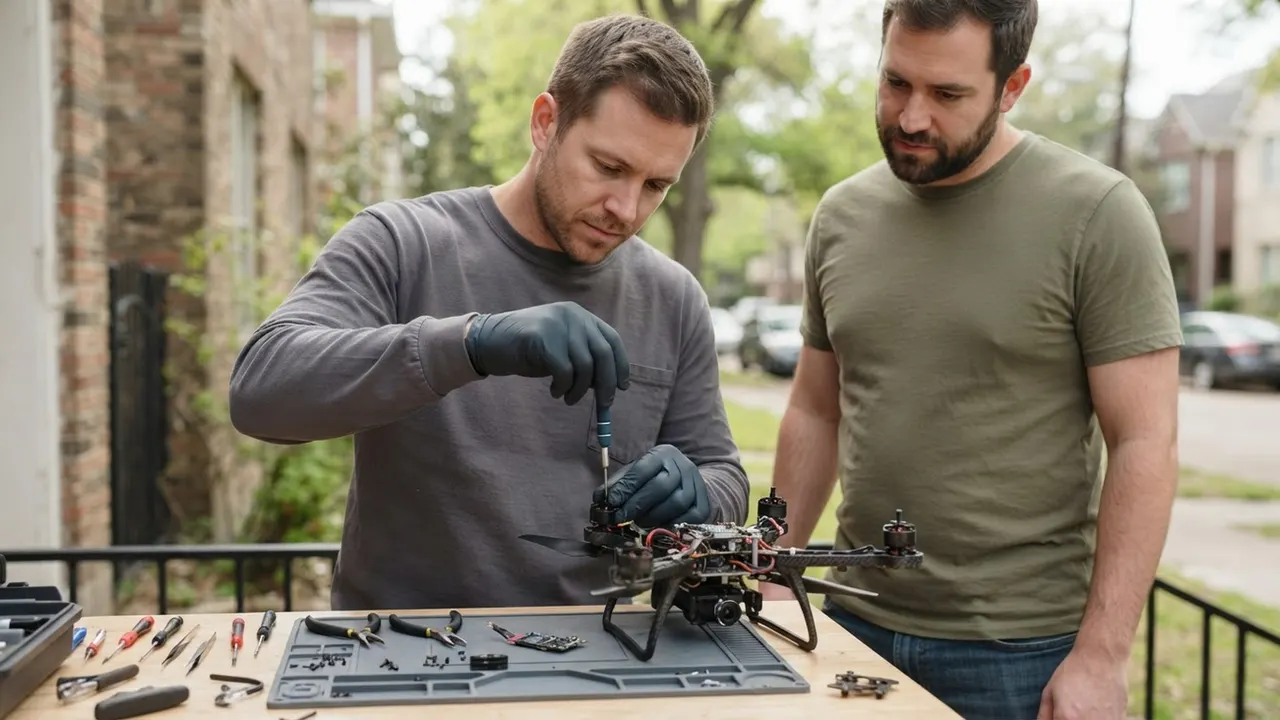 Drone RepairFull airframe repair for Houston pilots, from crash damage to firmware issues. If your transmitter fault came from a hard landing, we inspect the aircraft on the same ticket so both halves of the link are healthy before you fly again.Explore →
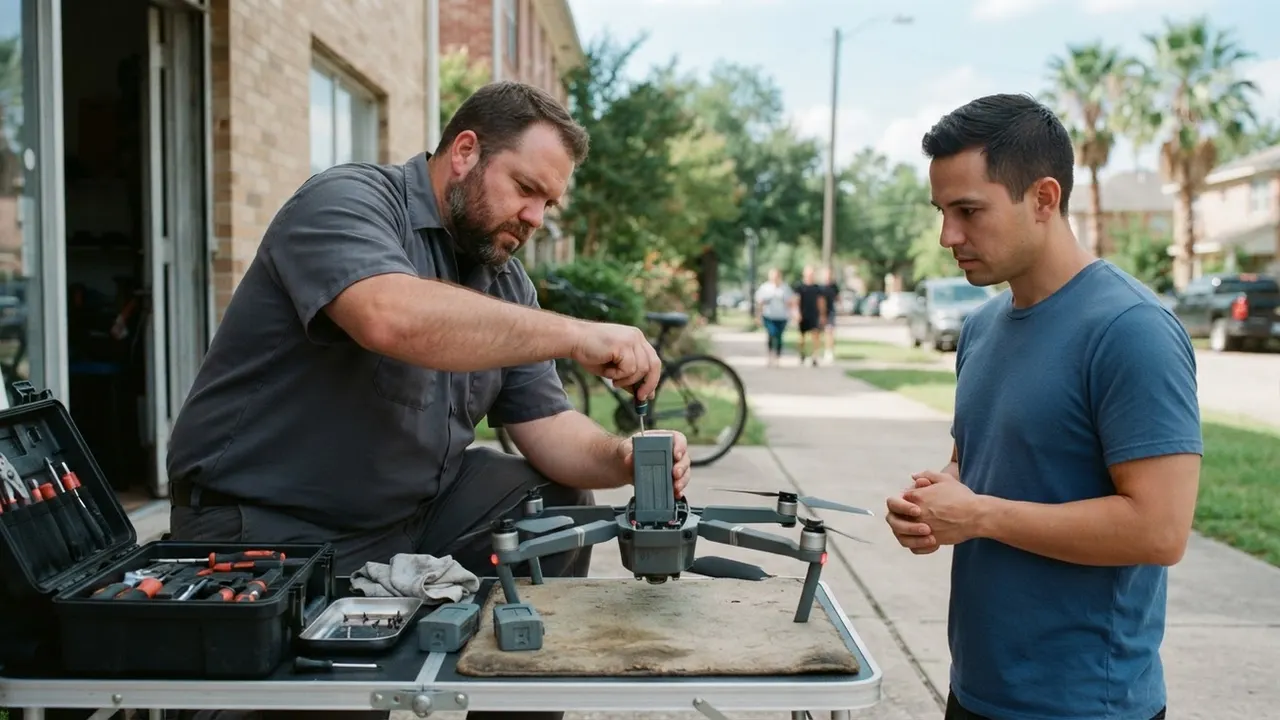 Drone Battery ReplacementSwollen or weak LiPo batteries cause brownouts that look like transmitter faults. We test pack voltage under load and replace cells or full packs for Houston flyers, so your controller is not blamed for a failing battery.Explore →
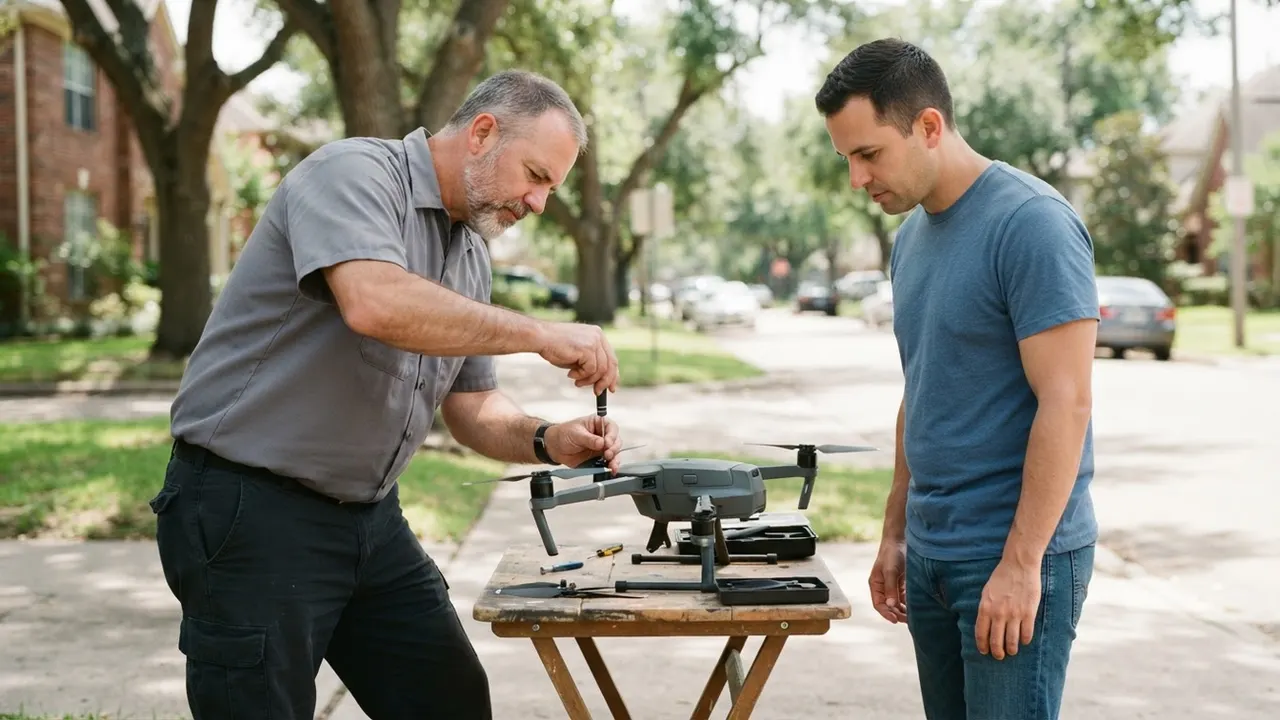 Drone Propeller ReplacementBent or chipped propellers cause vibration that stresses gimbal sticks and antenna mounts over time. We balance and replace props on a propeller balancer, which cuts the vibration reaching your transmitter and airframe.Explore →
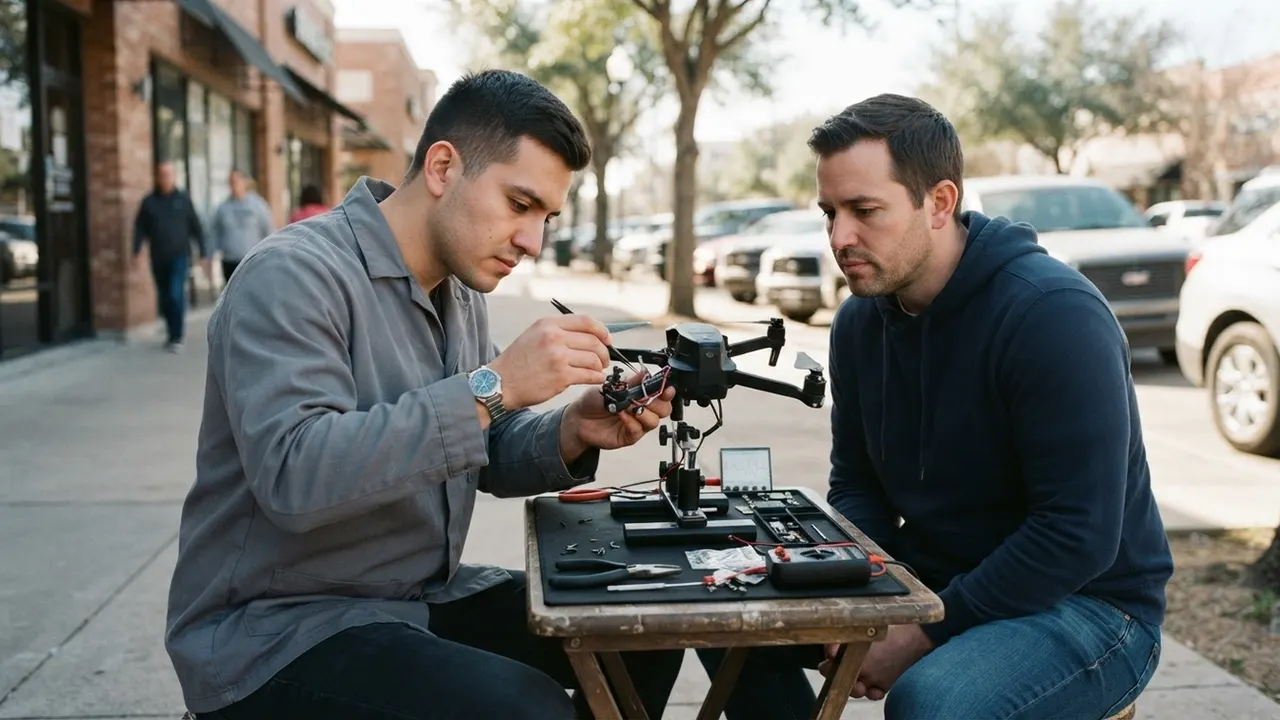 Drone Motor RepairBrushless motor failure often shows up as erratic control response that pilots mistake for a transmitter problem. We test each motor, replace bearings or the full motor, and confirm the fix with a matched test flight.Explore →
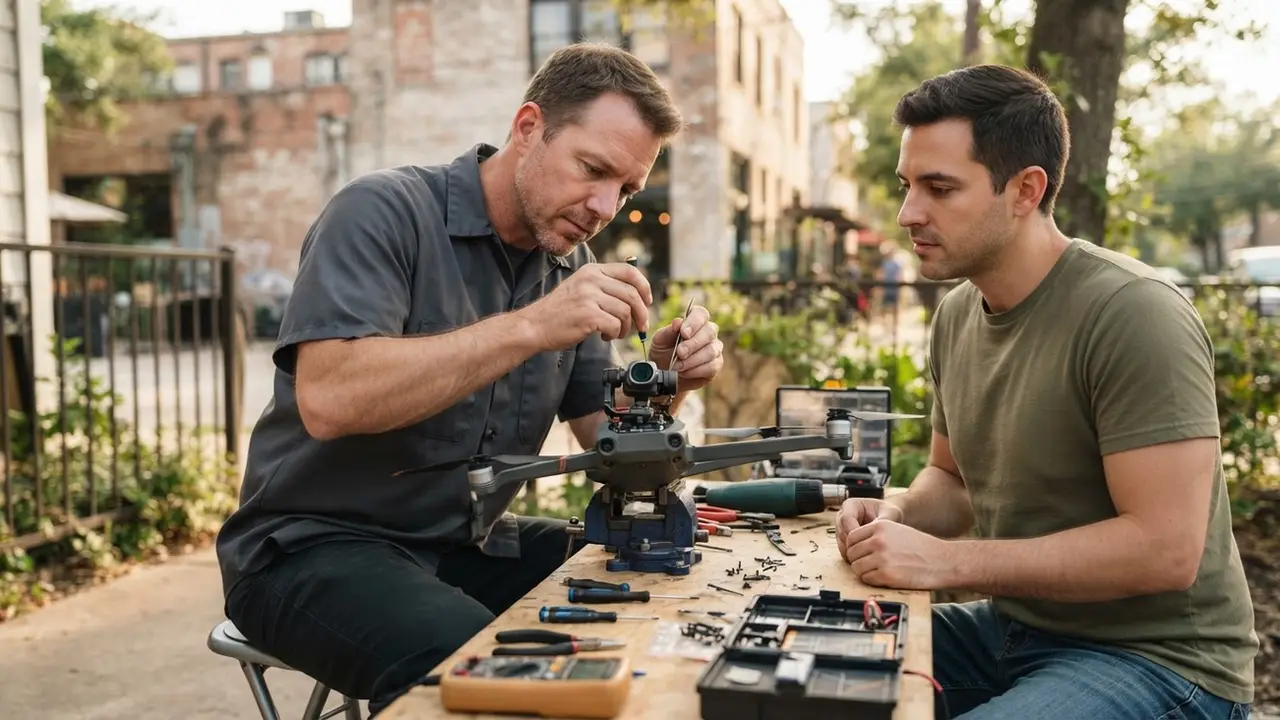 Drone Gimbal RepairGimbal malfunction and camera black screen can share a ribbon path with transmitter wiring. We trace the whole harness, repair the gimbal, and make sure the controller is not carrying a fault that belongs elsewhere.Explore →
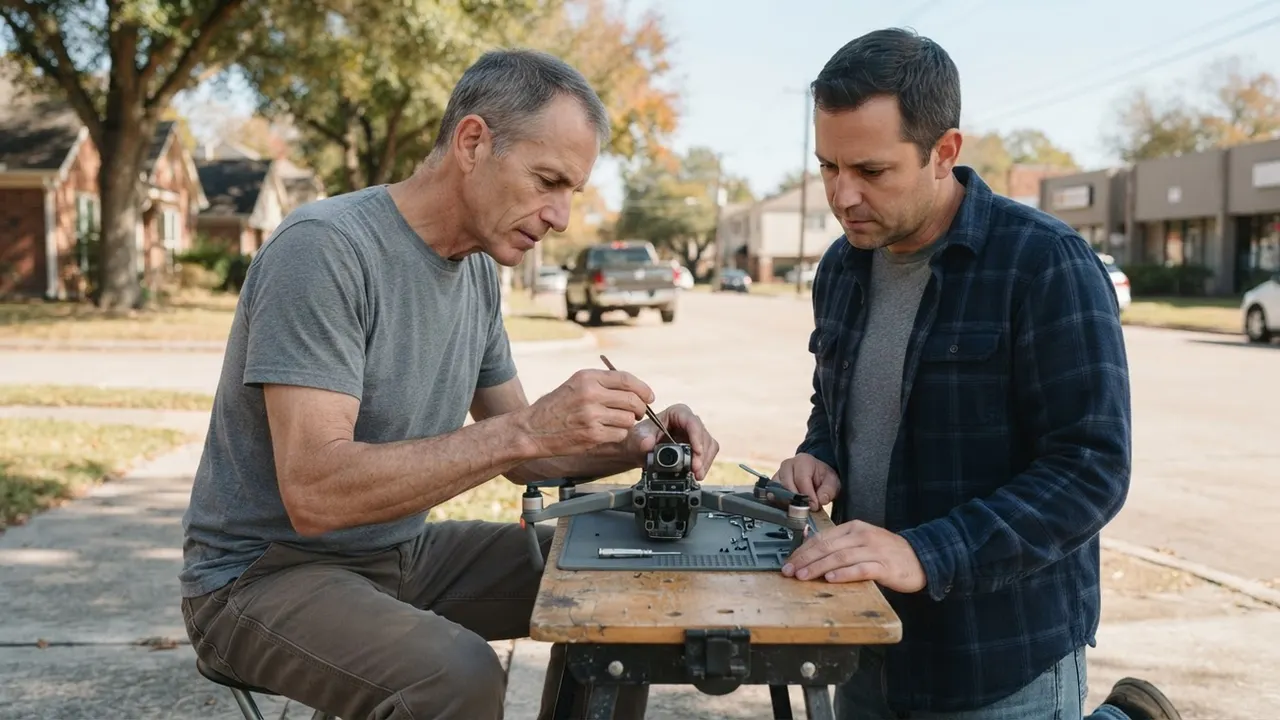 Drone Camera RepairCamera module faults sometimes trace back to a damaged control ribbon. We repair cameras for Houston operators and re-test the transmitter link at the same time, so you get one clean handoff instead of two trips.Explore →
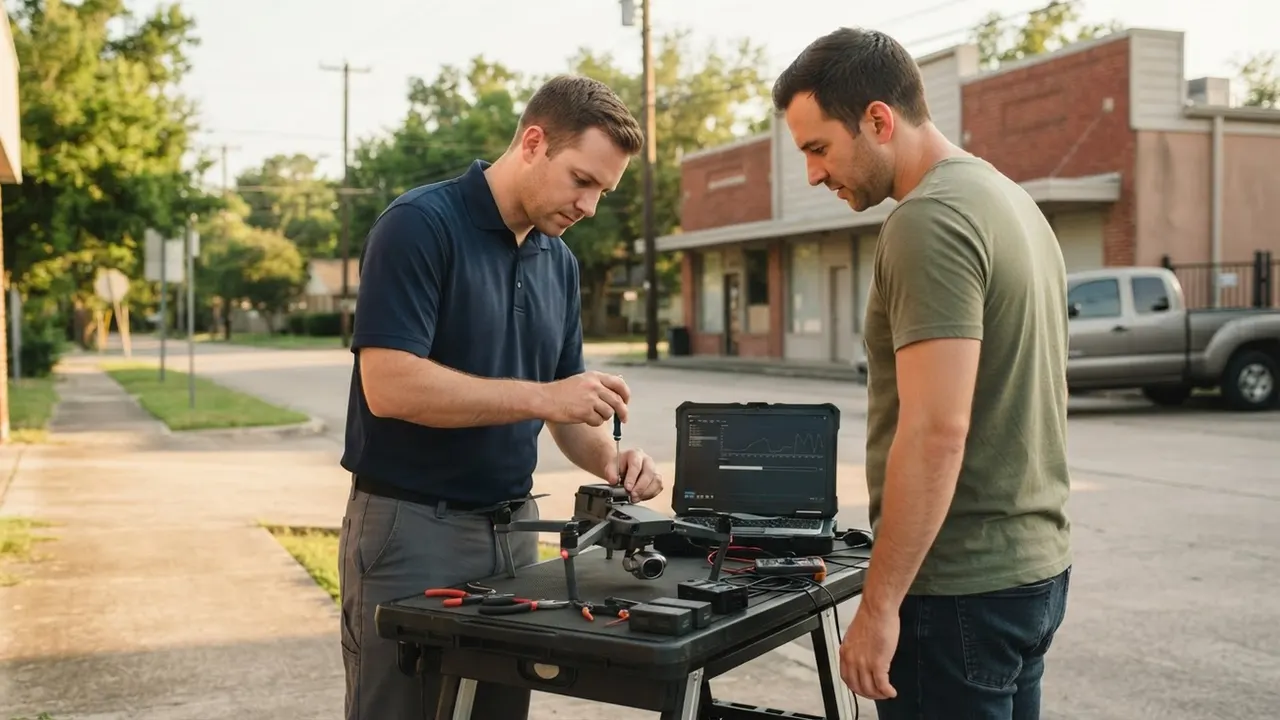 Drone Firmware UpdatesA botched firmware update can stop a transmitter from binding. We reflash controllers and aircraft to matched versions, then range-test. This is often the fastest fix for a controller that suddenly refuses to pair.Explore →
 Drone Software RepairApp crashes, failed calibration wizards and corrupted flight logs all affect how your transmitter behaves. We repair the software side, restore settings and confirm the radio link before the unit leaves the bench.Explore →
A grounded controller costs you flying time every day it sits. Call our Houston bench, describe the symptom and we will tell you the likely fault and turnaround before you drive over. Same-day diagnostics on most models.
Book A Repair +1 281 555 4468 →Call us at +1 281 555 4468 or stop by the shop. We are open Monday through Friday, 8 a.m. to 6 p.m., and we answer emergency calls 24/7 for commercial operators. Most diagnostics are done the same day you drop off.